In Search of Fellow Travellers
In Search of Fellow Travellers
Disclaimer: This article was written by me, with AI assistance used only for grammar, spelling checks, phrasing and language improvements. All views and experiences shared are entirely my own.
My GDG Journey — From the First Meetup to Building a Community
“Community isn’t built on slides or swags; it’s built on the shared belief that when people connect, something bigger happens.”
Seventeen years in technology is long enough to watch entire digital civilizations rise and evolve.
In 2009, when I was just beginning my journey at the University of Colombo, the landscape looked unrecognizable. We built for feature phones on JavaME, and machine learning was little more than a distant academic abstraction. Amidst that landscape, my discovery of developer communities was a game-changer.
In those days, we had no crowded calendar of tech conferences. But if you knew where to look, in the lively conversations at Refresh Colombo or among the early Microsoft Student Champs, we found something irreplaceable: fellow travellers drawn together not by swag or free food, but by the simple thrill of sharing what we were learning (Honestly, we enjoyed the swags and specially the free Pizzas at Microsoft Sri Lanka office :)).
It began in an empty lecture hall. A small group of us would sit together after lectures, talking late into the evening about code, phones, and where the world was heading. We weren’t trying to build an organization; we were just young, curious, and excited.
In late May 2009, right after Google I/O wrapped up, a spark was lit. If communities like this existed around the globe, why couldn’t we have one in Colombo?
In those days, the program was called GTUG (Google Technology User Group). There were forms to fill and boxes to check, and it would have been easy to feel too small for it. But on the 138 bus back to Kottawa, stuck in evening traffic, I brought it up with Charith Madusanka. He cut straight through my doubts with a simple smile: “Go for it. Just apply.”
A few days later, I clicked submit. That quiet conversation on a bus ride became the beginning of GTUG Sri Lanka.
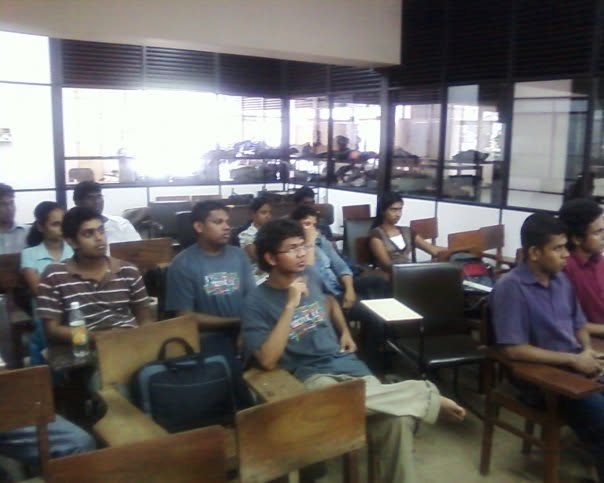
The next couple of years were a masterclass in running on sheer enthusiasm and absolutely zero budget.
We had no corporate sponsors, no marketing, and certainly no catered food. Our venues were whatever empty lecture halls we could borrow after hours. If the projector turned on without flickering, we considered it a victory.
For the most part, we were speaking to our own circle—batchmates, friends, and curious juniors who wandered in after class. But what we lacked in resources, we made up for in genuine excitement. We ran hands-on sessions on how to contribute to open source, hosted informal show-and-tells for random side projects, and organized deep-dives into Google Summer of Code (GSoC).
Back then, GSoC was a dream for many of us, and turning our meetups into a launchpad for students to get into global open-source projects gave our gatherings a real sense of purpose.
It was small, local, and intimate. But inside those four walls, we were learning how to share knowledge, how to bring people together, and most importantly, how to keep a community alive with nothing more than passion.
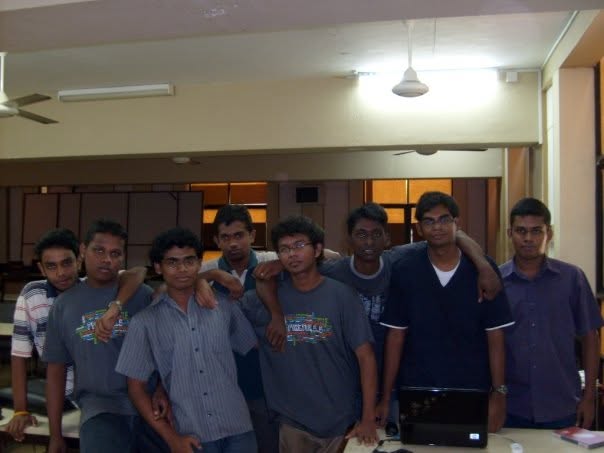
Initial crew was from left: Chathura De Silva, Udaya Shamendra, Chathika, Thenuka, me, Charith, Tharidu Fernando and Kalana Supun.
Gradually, our quiet efforts on campus began to ripple outwards. We started helping Google with a few regional dogfooding projects—testing early software and providing real-world feedback from a local perspective. We were simply happy to be useful.
Then came an unexpected email.
Divon Lan, newly appointed as Google’s Director for Next Wave Markets, was in town and invited us for dinner. Up until that point, our universe had been limited to our university lecture halls. But over that dinner, Divon widened our horizon completely.
He shared what other regional chapters were doing, showing us what was possible when a developer group grew with ambition. Even better, he plugged us straight into Google’s Developer Relations teams.
For years, we had operated with zero budget and whatever scraps of time we could afford. Now, almost overnight, we had access to real backing: developer programs, tools, global mentors, and the funding needed to dream bigger.
That single dinner changed our trajectory. It was the moment GTUG Sri Lanka grew from a tight-knit campus circle into a fully supported developer movement.
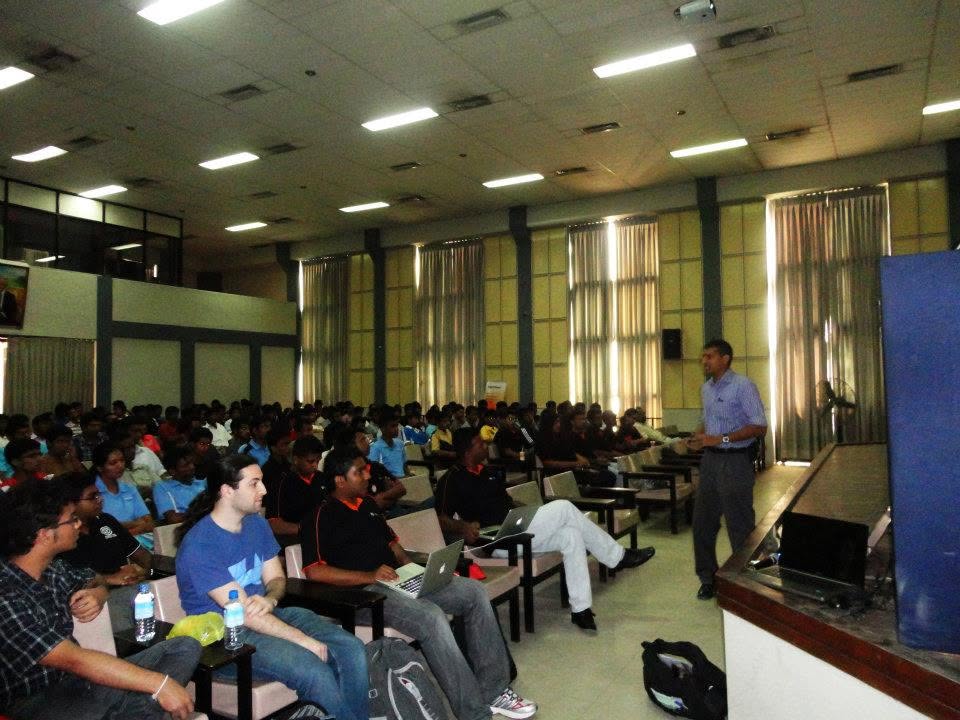
If the earlier years were about finding our footing, 2012 was the year everything accelerated.
We kicked off the year with our very first sponsored event: the first-ever Barcamp in Sri Lanka. It was an open, unconference-style gathering where there were no rigid schedules or VIP speakers—just whiteboards, open slots, and anyone brave enough to share an idea. 99X generously stepped up as our first sponsor, taking a bet on a grassroots community when corporate tech sponsorships were still virtually unheard of for us.
Later that same year, Google backed us to host AndroidCamp, bringing the explosive rise of mobile development straight to local engineers. Between these landmark events, we never stopped running our monthly meetups, keeping the rhythm alive week after week.
With this momentum came a new wave of fellow travellers. As our circles expanded beyond university corridors, gifted engineers, designers, and organizers joined the fold. Some walked alongside me for years, anchoring the core of the community, while others stayed for a season before carving out their own paths across the tech world. Each of them left a valuable mark on what we were building.
It was also around this time that Google officially rebranded the global program. The GTUG acronym was retired, and we stepped into our new identity: GDG Sri Lanka.
We weren’t just an informal student group anymore. We had a name, a growing family of fellow travellers, and a real mission.
In 2013, our story gained another crucial anchor. Rohan Jayaweera stepped into the role of Google’s Country Consultant for Sri Lanka—marking the first time we had a dedicated Google employee living and working on the ground with us.
I still remember our first meeting at a quiet coffee shop on Jawatte Road. Across the table was this warm, welcoming, slightly more seasoned presence who instantly understood what we were trying to build. Over the years, Rohan would become much more than our point of contact; he became a trusted mentor, a close confidant, and an exceptional fellow traveller.
With Rohan’s backing, 2013 became the year we dared to dream on a massive scale.
We launched two events that would reshape the local tech calendar. The first was Google I/O Extended Sri Lanka, which eventually grew into an iconic overnight phenomenon for thousands of developers. The second was GDG DevFest, our flagship annual conference that is remarkably still running strong after more than thirteen years.
We also pushed our boundaries with GDays Sri Lanka—a vibrant, ambitious festival where we joined hands with other blooming Google communities: the Google Business Groups (GBG), the Google Map Makers, and the Google Student Ambassadors. Many of these programs were fresh and finding their voices, but bringing them under one roof sparked something electric.
That convergence introduced me to an unforgettable circle of people. We were just young dreamers sharing pizza and late-night organizing calls, but many of those faces became my closest friends for life—and went on to become the pioneering startup founders, entrepreneurs, and tech leaders of the country.
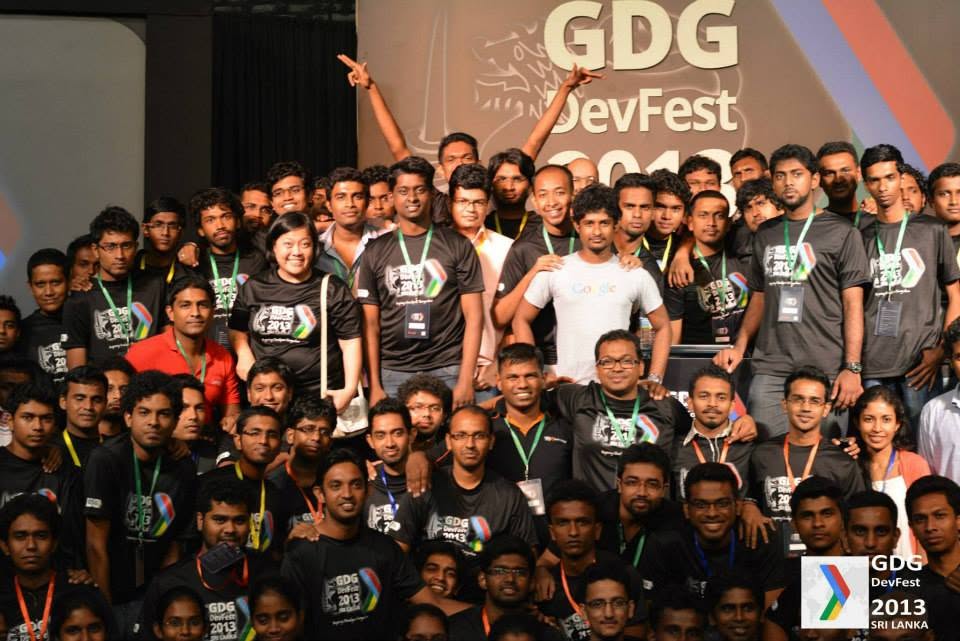
Nothing, however, prepared us for Google I/O Extended 2013.
When we first sat down to plan it with Mobitel, who had generously come onboard as our sole sponsor, our expectations were modest. Because it was an overnight event and our community still numbered in the low hundreds, we aimed for a cozy gathering of around 100 to 150 people at the Sri Lanka Foundation Institute.
Then we opened registrations.
Within days, the form blew up. Hundreds of sign-ups turned into thousands. Pure panic set in. We had an emergency meeting with the Mobitel team, scrambling for a Plan B. We quickly upgraded to the largest hall the Foundation Institute had, rigged up external screens, and scattered bean bags across the corridors and lawn outside to handle the overflow.
On the night of the event, more than 1,200 people showed up.
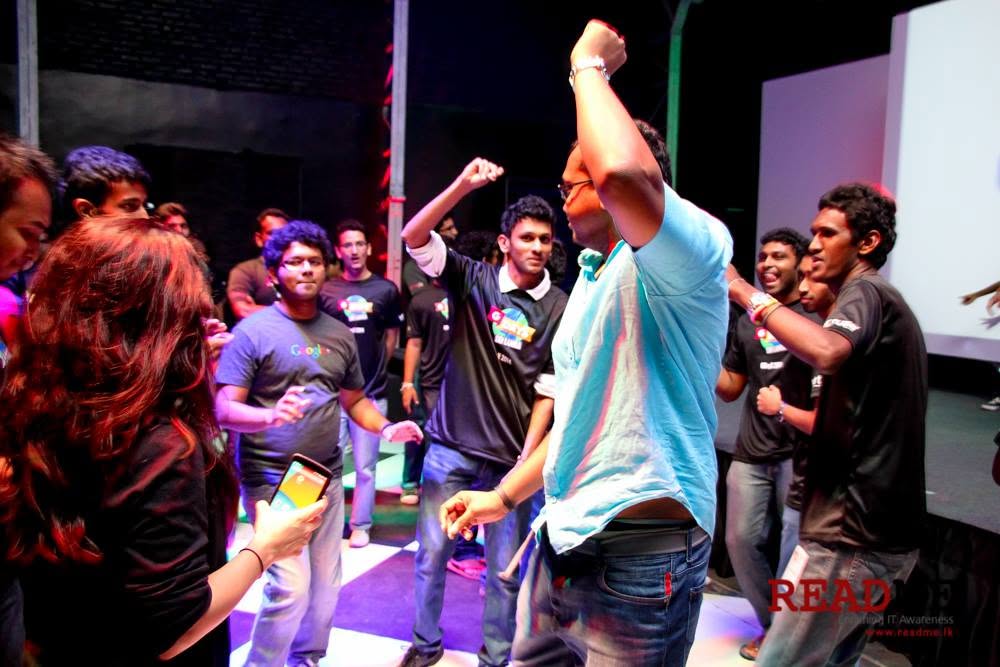
To say it was chaotic would be an understatement; we were running on adrenaline, barely managing to guide the sea of people through the doors, keep the live streams running, and handle the crowd through the night. It pushed every single one of us to our limits. But watching over a thousand developers sitting together in the dark, eyes glued to the keynote until sunrise, we realized something profound: developer culture in Sri Lanka had finally arrived.
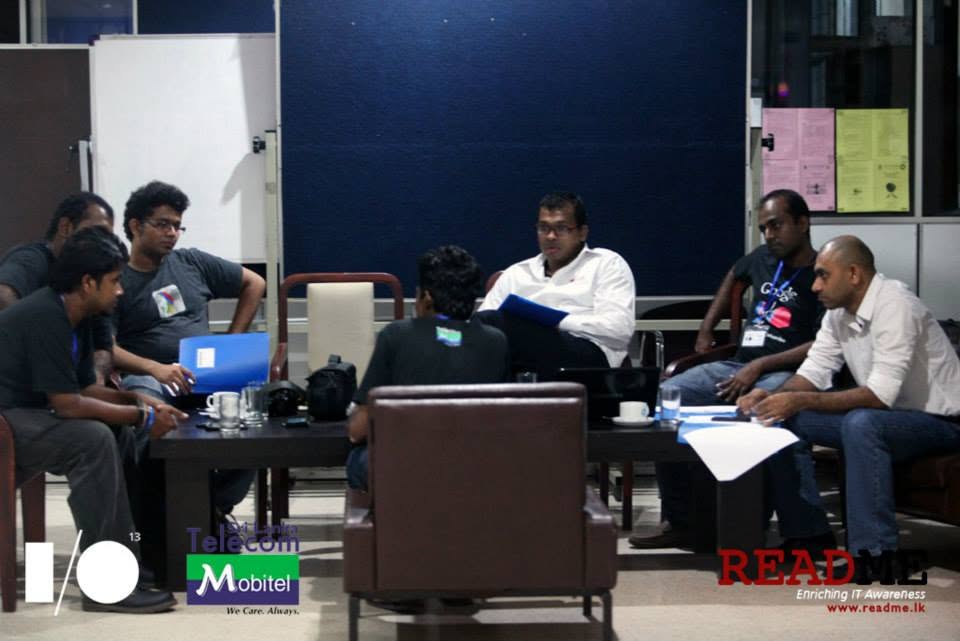
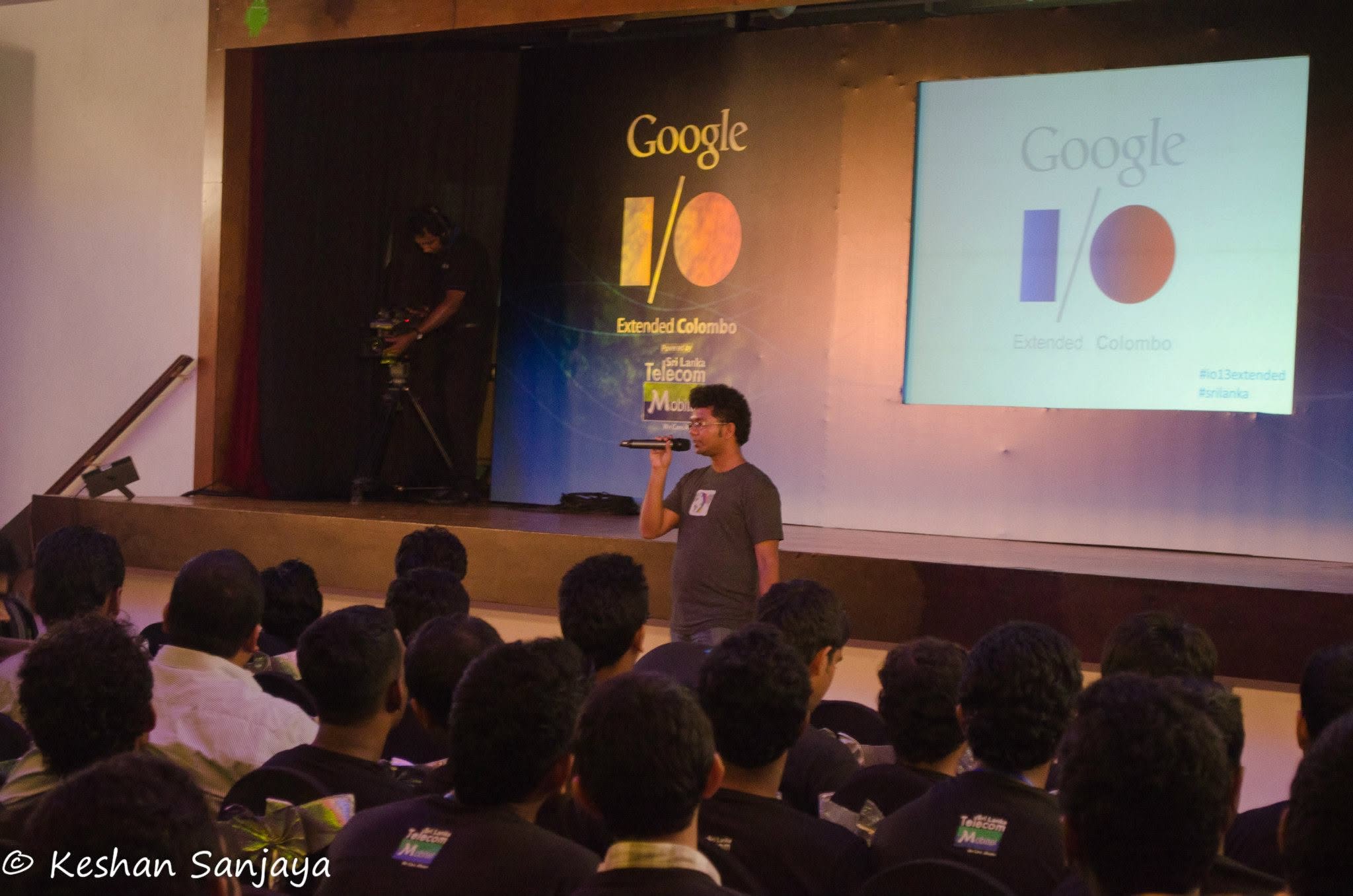
More than the crowd, that chaotic I/O night brought new companions into my orbit. It was where I crossed paths with Dihan, Udaya (Gunathilake), and Tharaka (Devinda). They had come from the vibrant Google Map Maker community, but they quickly became instrumental pillars across countless GDG initiatives—and some of the closest fellow travellers in my life.
We also refused to let developer culture remain trapped inside the Colombo bubble.
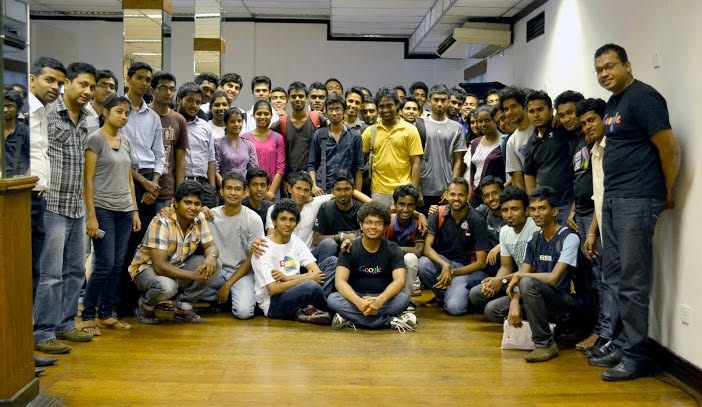
In late 2013, we packed our bags and took the community on the road for our first-ever event outside the capital: GDays Kandy. Along with Rohan and a generous group of speakers and volunteers, we gathered at the historic, century-old Queen’s Hotel, right beside Kandy Lake.
There was something surreal and unforgettable about talking Android, Cloud, and the open web beneath those colonial chandeliers and wooden beams. It proved to us what we had always suspected: the hunger to learn and build wasn’t confined to Colombo—it was waiting everywhere across the island.
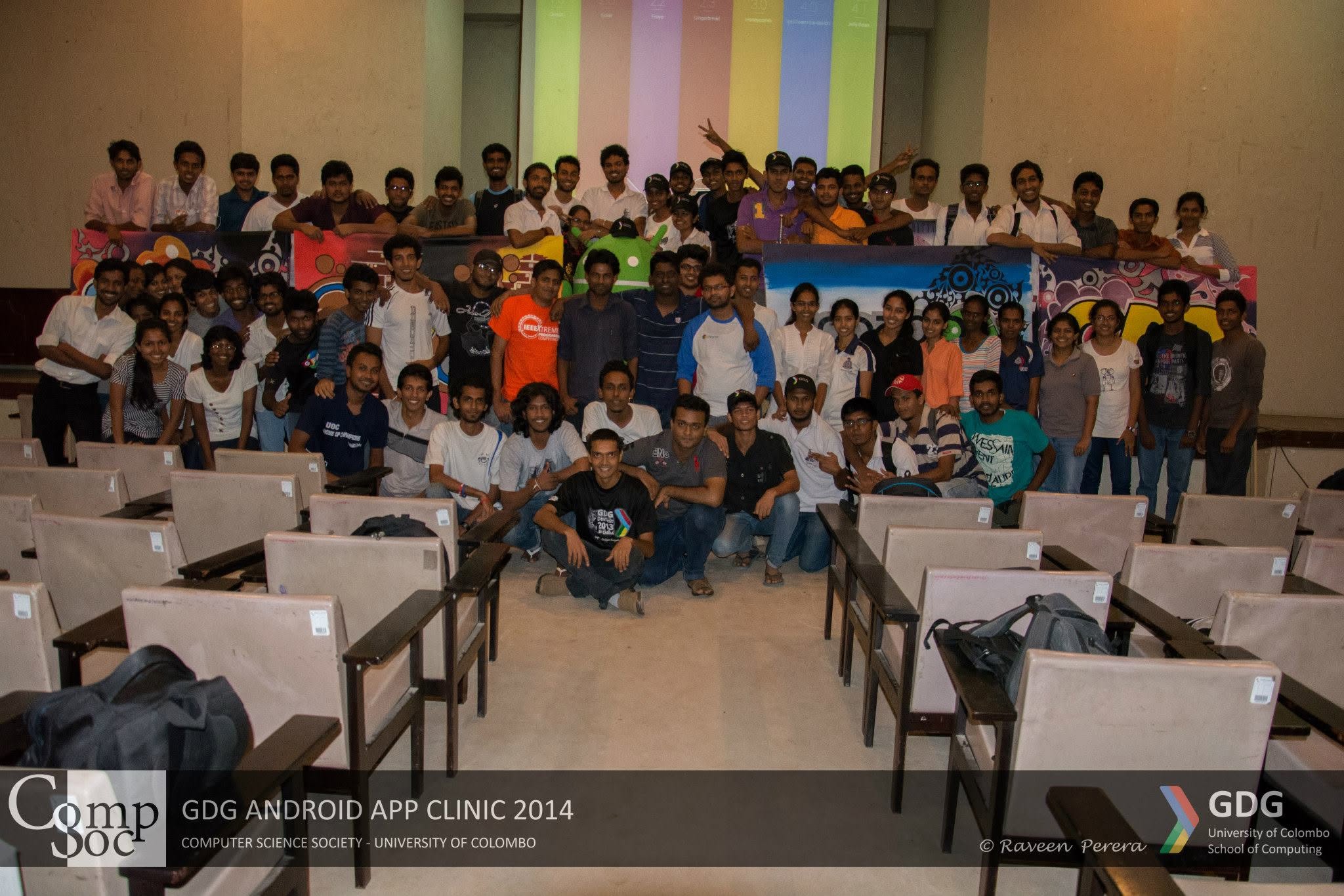
By 2014, we began experimenting with new formats. We didn’t just want passive audiences; we wanted to help developers build better software. That led us to host our first App Clinic.
We invited local mobile developers to submit their apps for open review. We assembled a panel of industry veterans, engineers, and entrepreneurs across tech, UX, and marketing to dissect the apps live—diagnosing critical performance bottlenecks, critiquing user flows, and helping teams refine their product strategies.
That single event introduced me to Raveen, Milindu, Dilini, and Tharindu Ranathunga. Each of them would go on to play pivotal roles in carrying the community to unprecedented heights, becoming trusted brothers and sisters on this long road.
Around that same period, a Cloud Developer event hosted at SLIIT introduced me to Pamuditha. Years later, when GDG Sri Lanka would navigate some of its most demanding and turbulent times, it was Pamuditha’s steady leadership, vision, and resilience that breathed new life into the community, ensuring our flame never went out.
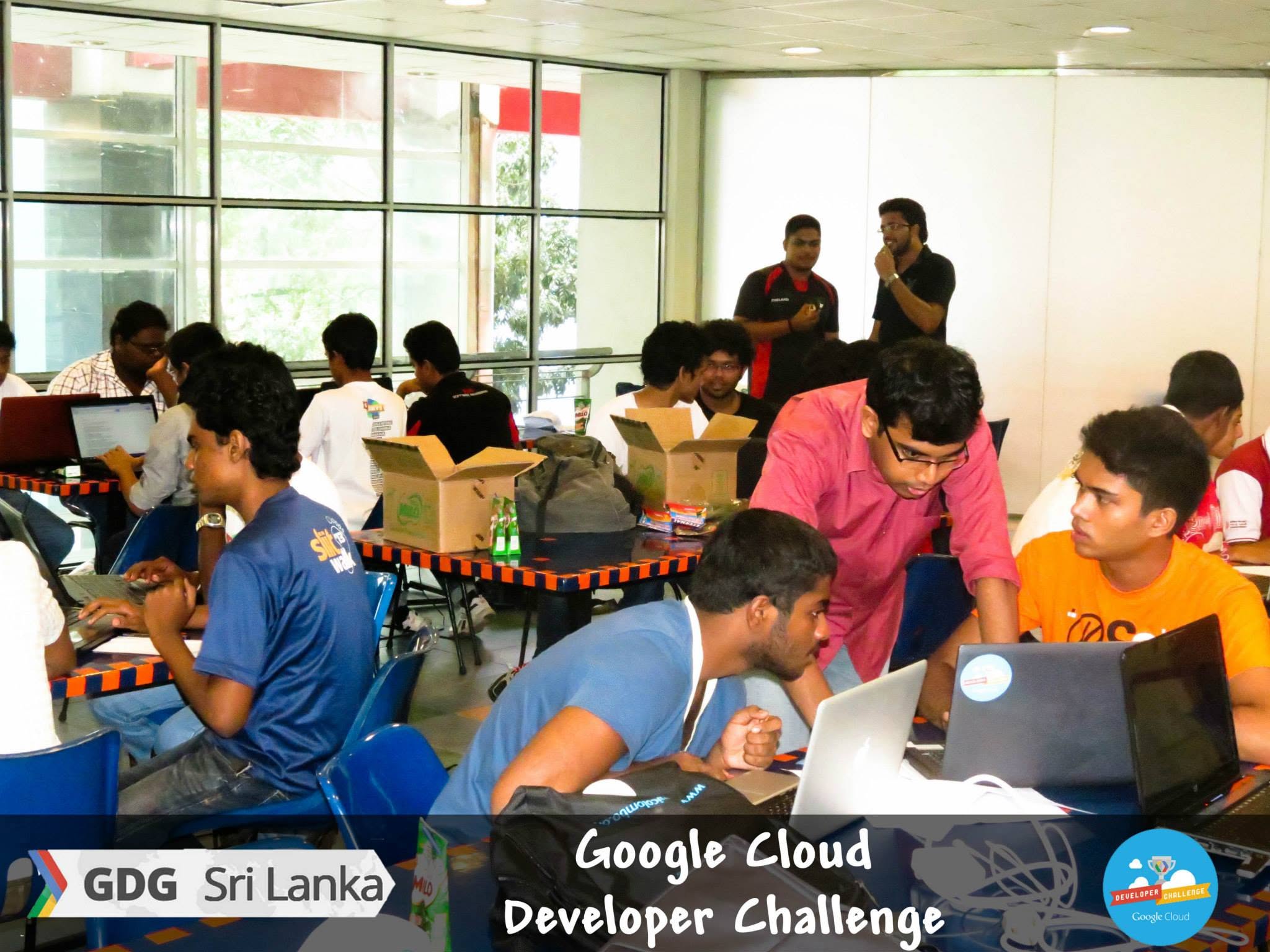
By late 2014, I realized that for GDG Sri Lanka to truly endure, it could never be a one-man show. The healthiest thing a founder can do is know when to pass the baton.
While I stayed closely involved with other Google community programs, I decided to step back from the steering wheel and hand the day-to-day leadership to fresh hands. It was the right call. A community needs new voices, new energy, and the room to evolve beyond its origins.
Sandun and Dushantha stepped up with incredible passion. They took the torch and ran with it, proving that 2013 wasn’t just a one-off miracle. Under their stewardship, they pulled off Google I/O Extended 2014 for a second consecutive year and orchestrated DevFest 2014, taking our production, scale, and community reach to heights I could only have dreamed of back in that empty lecture hall.
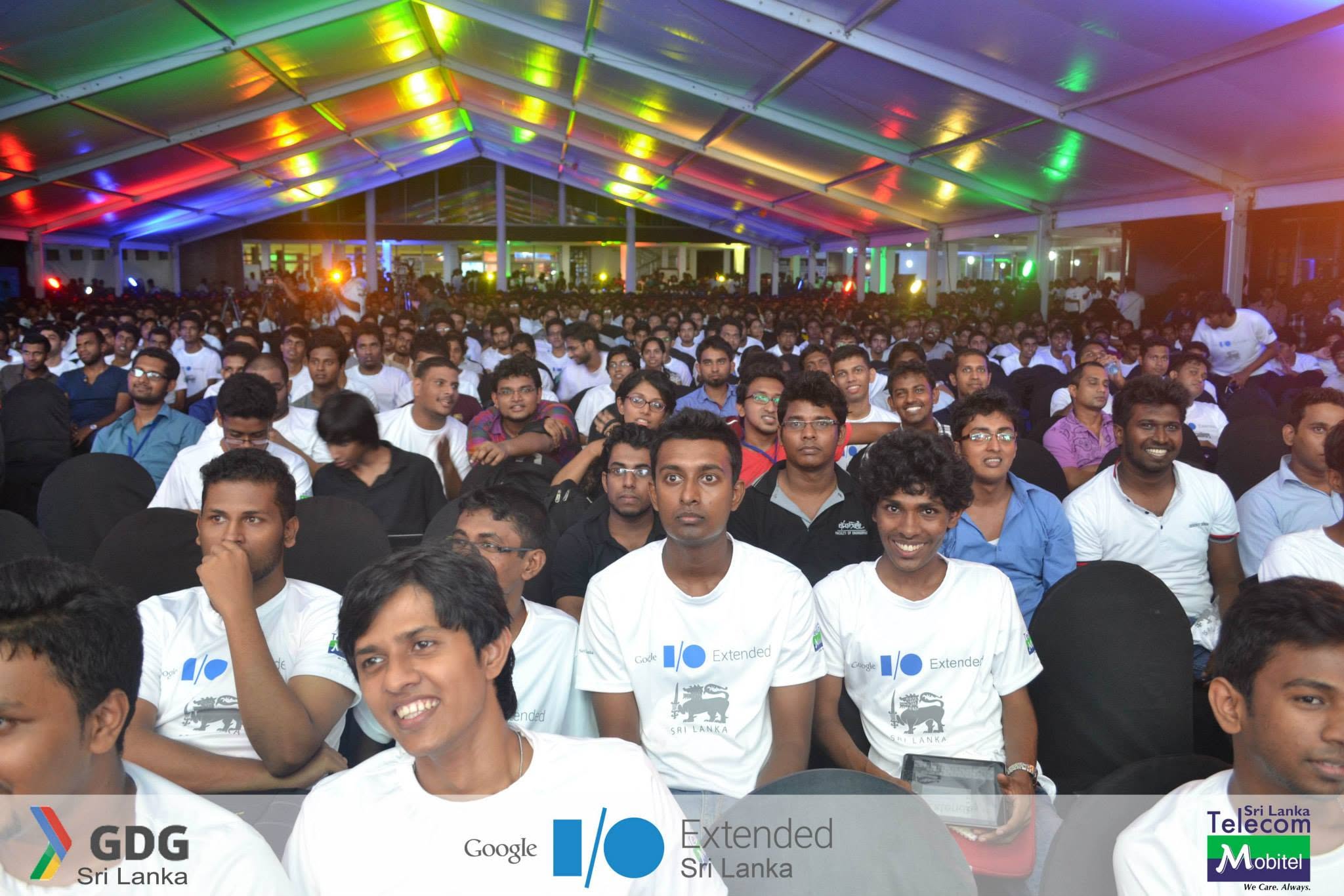
Over the years that followed, our two flagship gatherings began to diverge along two distinctly different, beautiful paths. They became two sides of the same coin—each answering a completely different need in Sri Lanka’s tech ecosystem.
Google I/O Extended evolved into an all-night developer carnival. Up until the world paused for COVID, it reigned as the most iconic overnight tech festival in the country. It was sprawling, electric, and unapologetically fun. We welcomed thousands of people through the doors, transforming the venue into a night market of ideas. There were product demos, startup showcases, and cutting-edge tech previews, but there were also midnight arcade games, quiz battles, bean bags, music, endless laughter, and mountains of midnight food. For so many school students and first-year undergrads, I/O Extended was their very first glimpse into technology. It demystified the industry and proved that being a developer wasn’t just about staring at terminals—it was a culture, a tribe, and a celebration.
GDG DevFest, on the other hand, chose depth over scale.
We intentionally resisted the temptation to make DevFest another mega-crowd event, capping attendance at around 500 practicing engineers. Where I/O was a festival, DevFest was a sanctuary for the craft. It was designed as a high-density, professional masterclass—a place where developers came to dive deep into architecture, study advanced tooling, and learn directly from the sharpest minds in the region. The conversations in the hallways weren’t casual pleasantries; they were passionate debates about distributed systems, mobile performance, and cloud infrastructure.
Together, the two events formed a natural rhythm: you fell in love with the magic of tech at I/O Extended, and you returned to master the discipline at DevFest. One opened the door wide to the world; the other gave our best engineers a stage to grow.
That era also sparked our most ambitious journey yet: taking GDG truly nationwide.
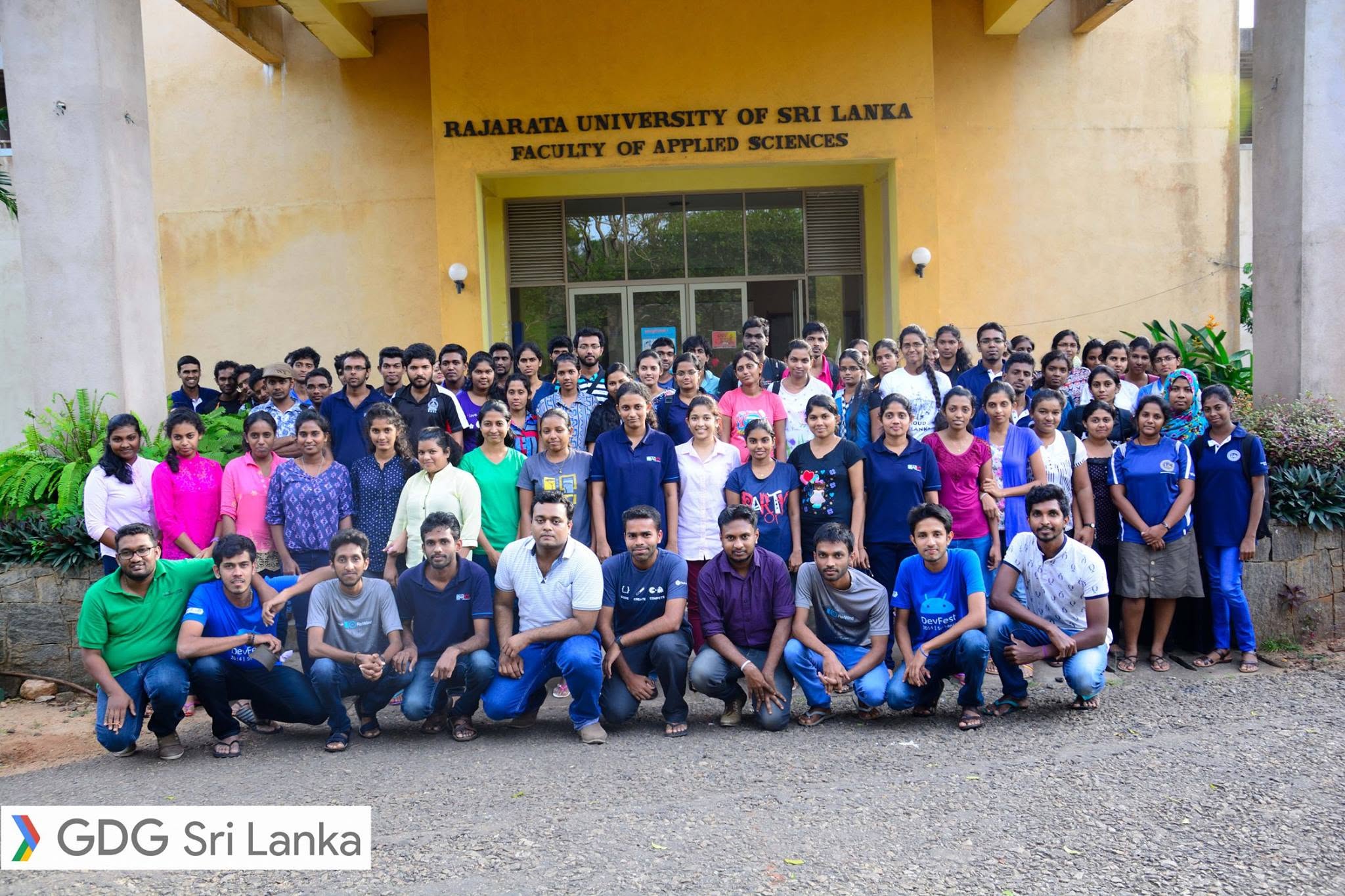
We refused to remain an urban club. We packed our slides and gears and traveled across the island, bringing workshops and mentorship directly to students. We went from Colombo and Moratuwa out into the heartlands—to Rajarata University in Mihintale, Uva Wellassa University in Badulla, Sabaragamuwa University amidst the hills of Belihuloya, and down south to the University of Ruhuna in Matara. Standing in those packed auditoriums, looking at hundreds of students who were hungry to build despite having far fewer resources than their peers in the capital, was one of the most humbling experiences of my life.
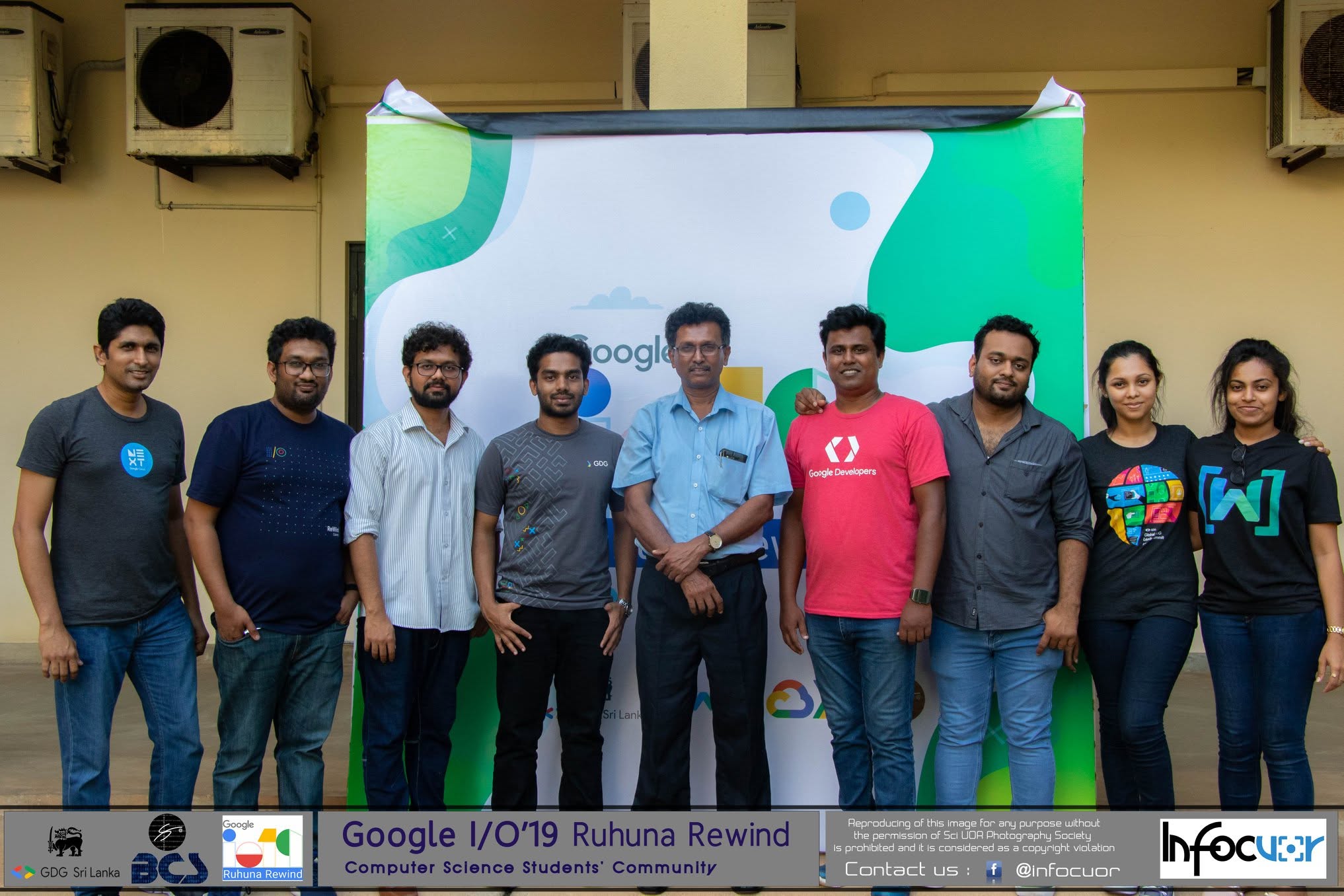
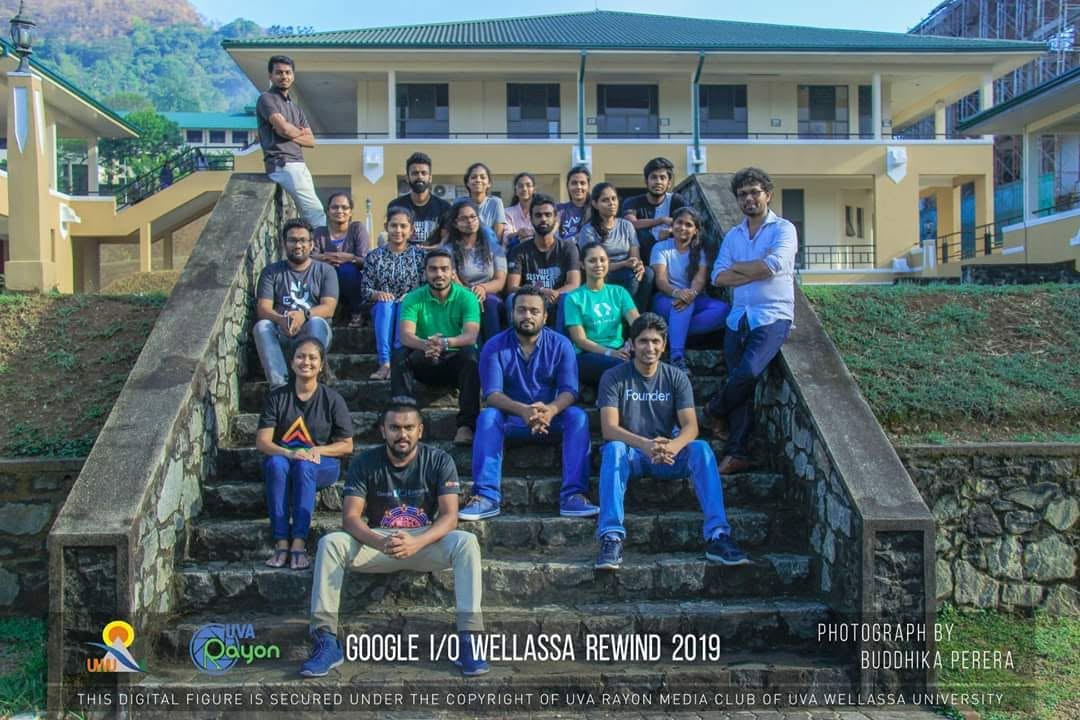
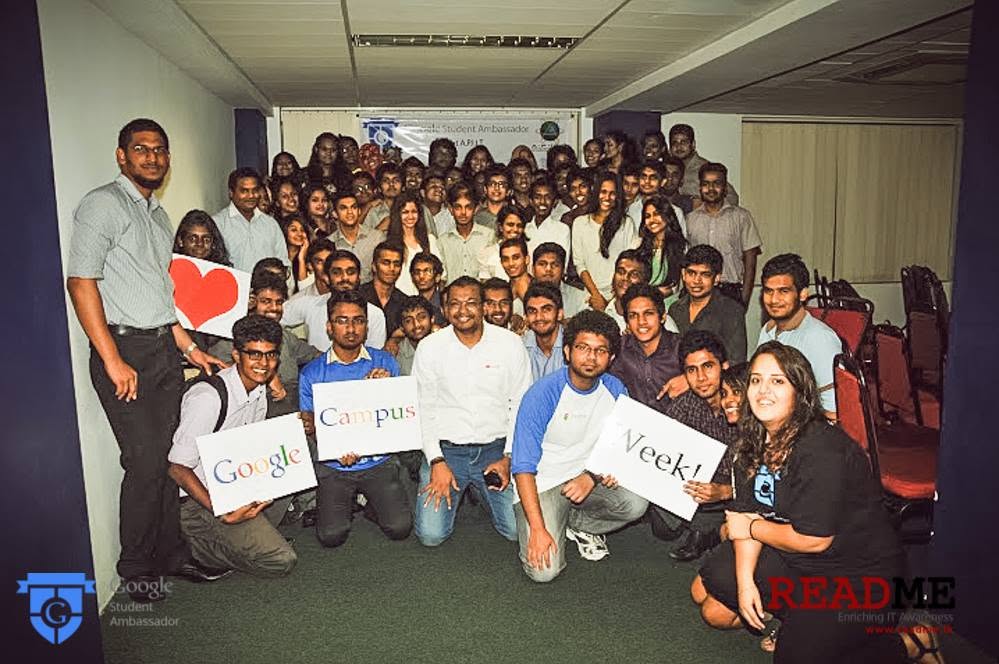
But we didn’t stop at universities. Through our GCollege initiative, we took that same spark into rural schools. I still remember traveling up to the cool hills of Bandarawela to run an event for school kids who had never seen a working Googler up close. Watching their eyes light up when they realized that technology wasn’t some distant magic, but something they too could master, reminded us why we started this journey in the first place.
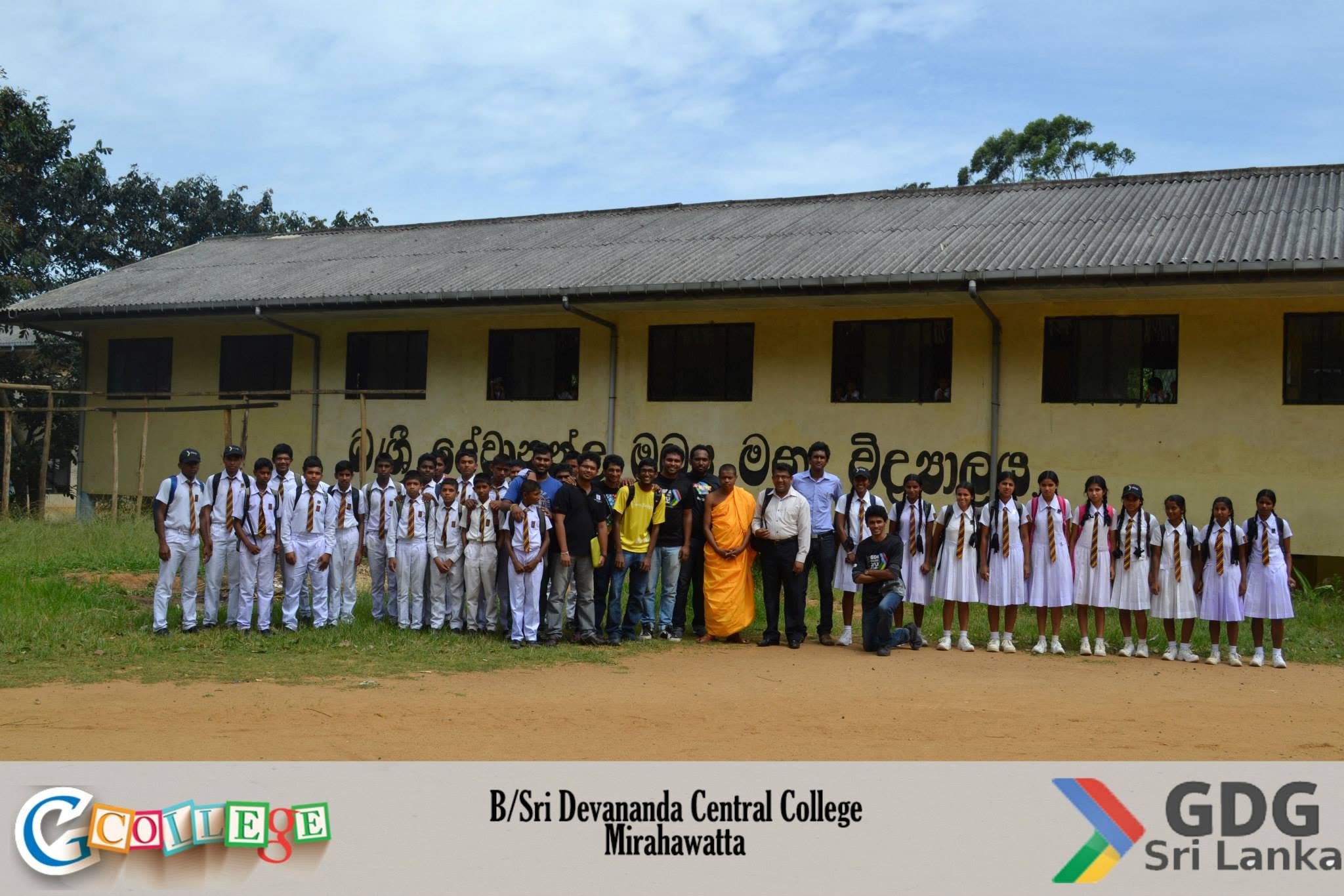
In our high-growth years, it was tempting to measure impact on a scoreboard: registration counts, auditorium capacities, Twitter trends. But looking back, real impact is never statistical it is deeply personal. It’s the student from a regional university who had never seen a working engineer, who caught a spark in that hall, learned Git, got into open source, and is now leading teams across the world. You don’t build a community for crowds, you build it for the few whose lives will pivot because they walked through that door.
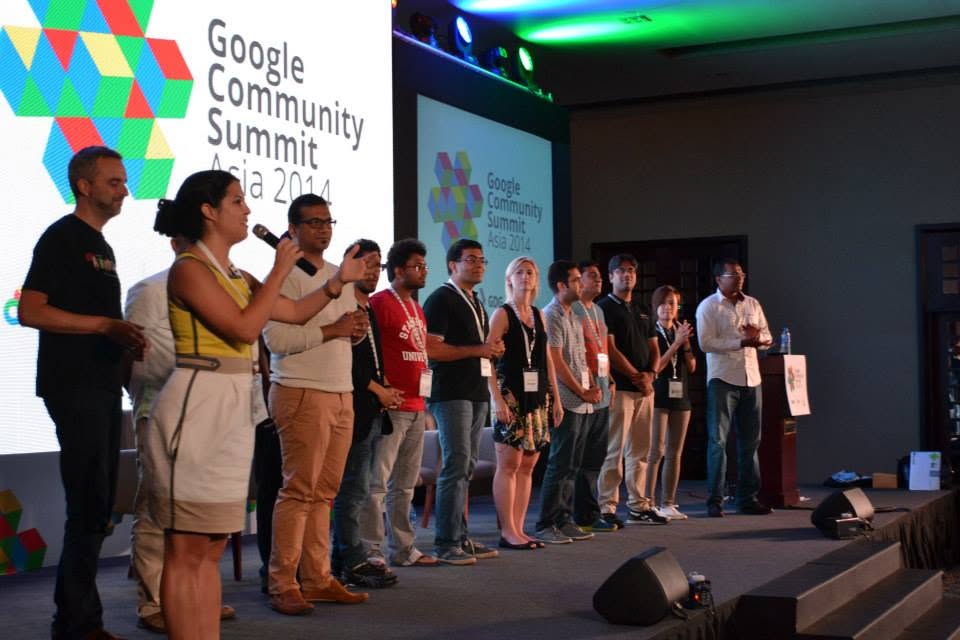
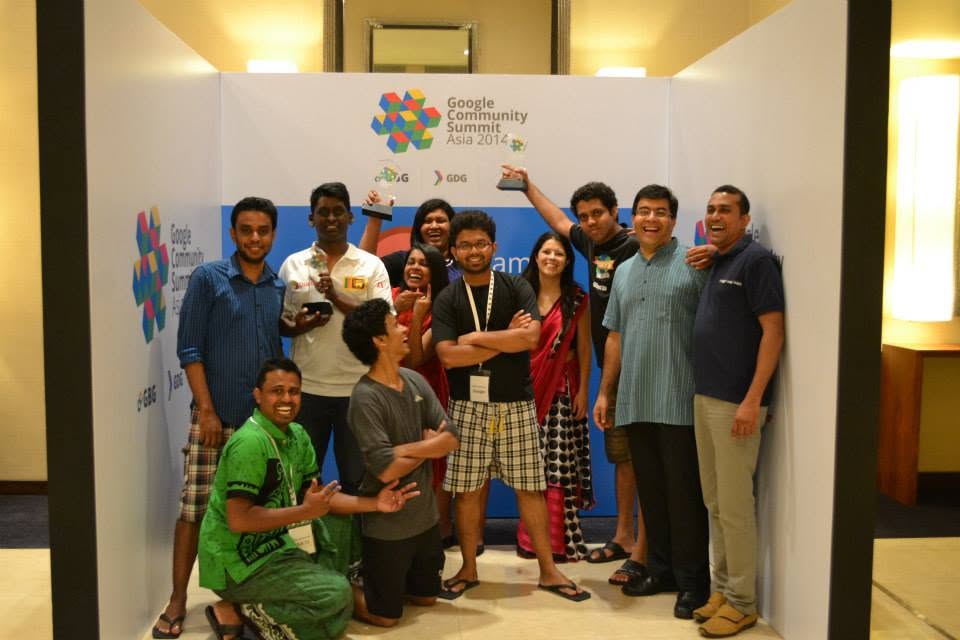
In 2014, our international footprint reached another milestone: we hosted the Google Asia Community Summit right here in Sri Lanka. Welcoming community leaders, regional organizers, and Googlers from across the Asia-Pacific region to our shores was a surreal feather in our cap. It proved to the world—and to ourselves—that a small island with big dreams could host and inspire the best in Asia.
As time went on, the baton kept moving through a relay of dedicated hands—passing from Sandun and Dushantha, Roshan to Udaya and Tharaka, then to Raveen, Milindu, Pamuditha, Pasindu (de Silva), Shafraz (who played a pivotal role in organizing Google IO extended in a grand level since 2015), Dilini, Pasan, Sumedha, Chamath, Pasindu (Marasinghe), Michela, Anusha, Uthpala, and many others and currently to Suresh, Dilanka, Chamod, Nuwini, Damsara and others. Each generation brought its own distinct flavor, its own hunger, and a fresh wave of imagination. The community never stagnated because each new team was brave enough to reinvent it.
None of that growth happened in isolation. Along every step of the road, we had the incredible faith and backing of champions inside Google who believed in our island—mentors like Erwan Mace, Divon Lan, Van Riper, Stephanie, Chelle, Erica, Ola, Uttam, Mani and countless others across the global DevRel team who opened doors, guided us, and backed our wildest ambitions.
Looking back, the developer community was never merely a group of engineers sitting in rooms talking about code. It was a living, breathing organism that grew alongside the pulse of the island itself.
We became part of a larger, collective rising tide. We worked side-by-side with emerging tech media and partnered with national apex bodies like SLASSCOM and ICTA, helping transform grassroots community culture from an extracurricular hobby into a recognized engine of Sri Lanka’s knowledge economy. Industry leaders stopped viewing student meetups as trivial; they began to see them as the very soil from which the country’s next generation of architects, founders, and CTOs would grow.
But perhaps what surprised us most was how far our island’s voice travelled beyond our shores.
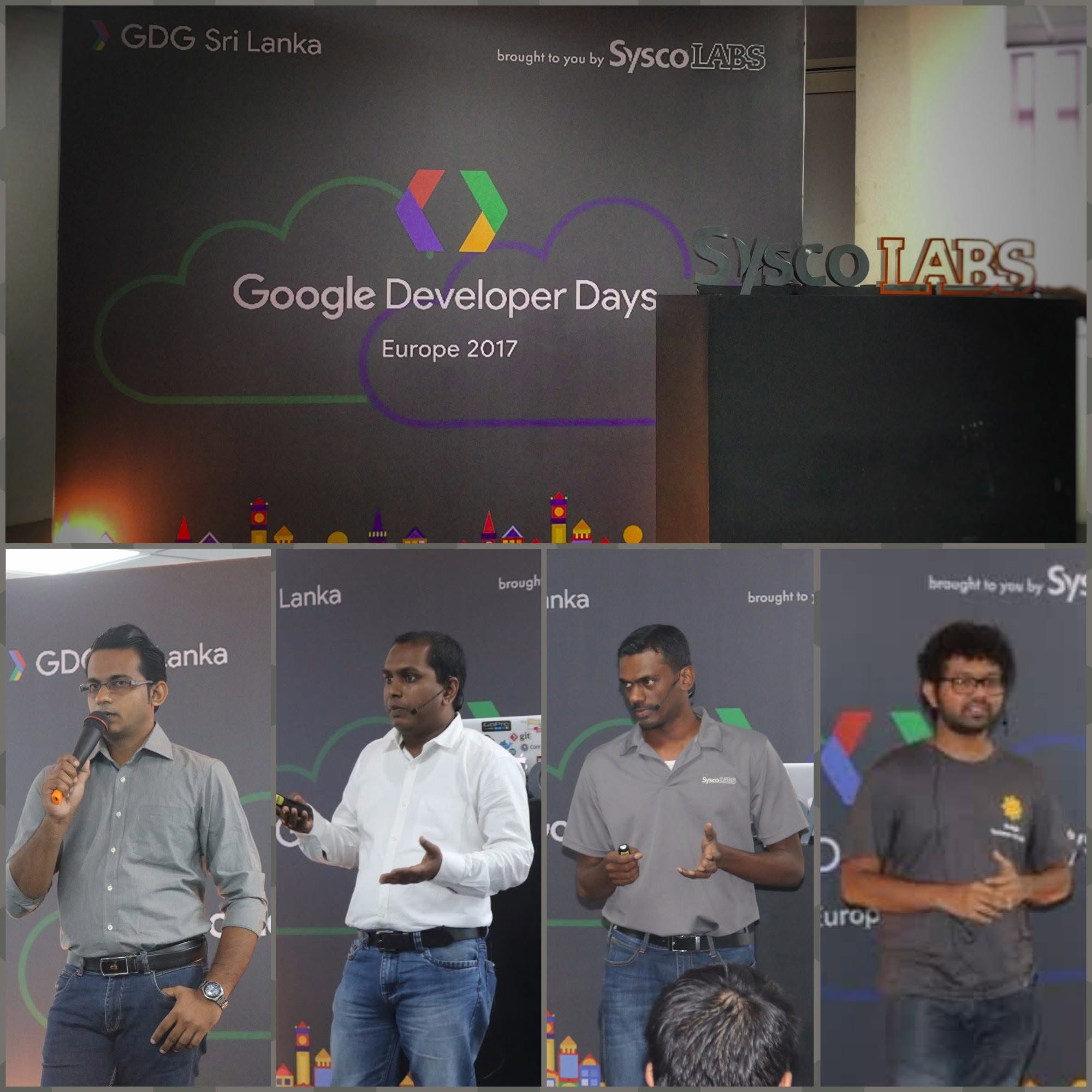
We bridged oceans. We partnered with DevDays Europe, creating cross-continental live streams that linked auditoriums in Colombo with stages across Europe. Our organizers represented GDG Sri Lanka at global developer summits around the world, proving that our engineers could stand shoulder-to-shoulder with the best in the world.
And then came that unforgettable, surreal moment during a Google I/O Keynote, when Sundar Pichai mentioned GDG Sri Lanka on the global stage before millions of viewers worldwide. For a team that had started with zero budget, borrowing chairs in university halls and planning meetings on the 138 bus, hearing our little island’s name spoken from Mountain View felt like an impossible dream coming full circle.
Yet, seventeen year later, if you ask me what I remember most vividly from all those years, it isn’t the keynotes, the stage lights, or the official metrics.
It was everything that happened around the events.
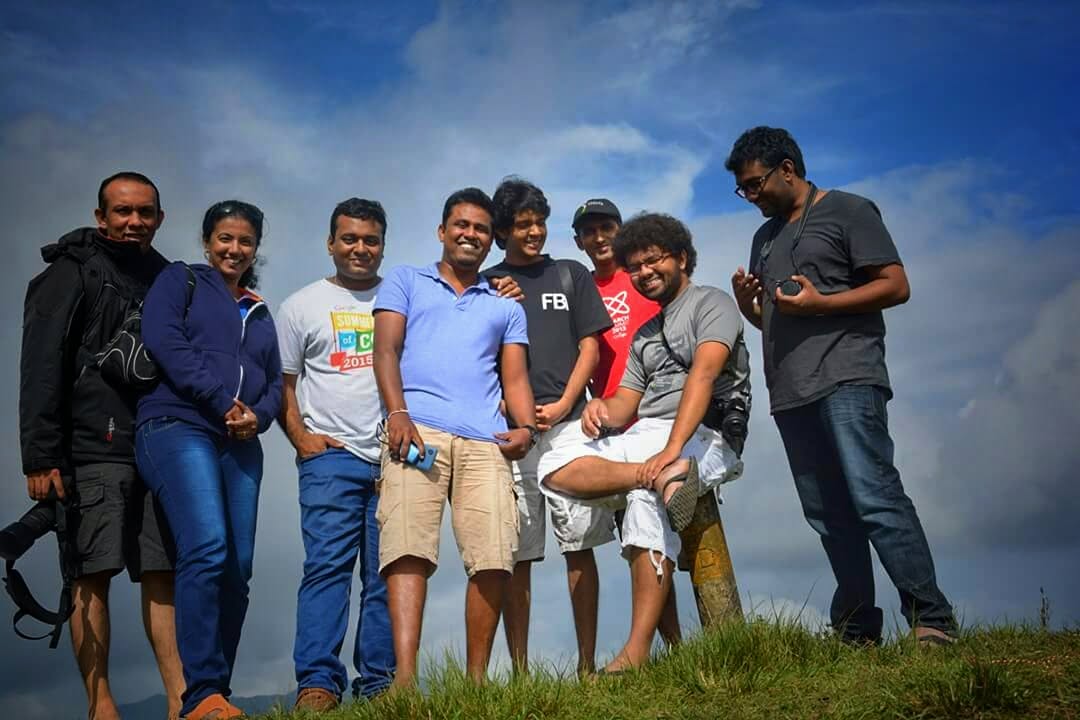
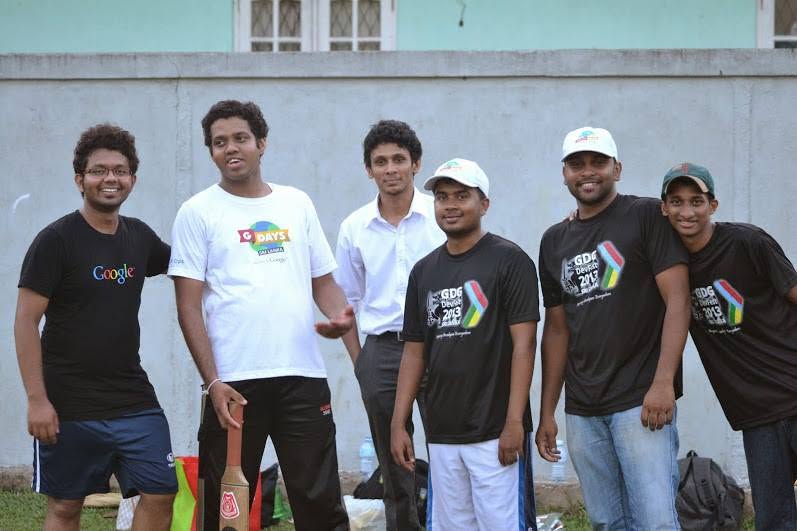
It was the exhausted, euphoric post-event dinners where we collapsed into chairs, devouring late-night meals while replaying every highlight and every near-disaster. It was the impromptu, fiercely competitive cricket matches we played to blow off steam after weeks of relentless organizing. It was the inside jokes born while stuffing swag bags, the midnight troubleshooting calls, and the shared triumph of pulling off something impossible on a shoestring budget. That was the real glue. Technology was the excuse that brought us into the room; genuine friendship was the reason we never left.
That is the quiet secret of community building: GDG was never a logo, a corporate program, or an organization. It became an autonomous, living entity. It has outlived phone operating systems, frameworks, and hype cycles—navigating the shift from JavaME and early Android, through the cloud boom, and now into the dawn of generative AI. With every passing tech era, a new generation of leaders has inherited the flame, adapted the format, and shaped the community to speak to their peers.
Today, I happily sit in the back seat.
There is an indescribable peace in watching something you once dreamed up on a crowded 138 bus thrive in hands far younger, sharper, and more energetic than your own. I don’t feel a shred of nostalgia for the steering wheel. Instead, I feel an overwhelming sense of gratitude.
We started this voyage seventeen years ago simply looking for a few fellow travellers who shared a spark of curiosity. What we found was a family, a nationwide movement, and lifelong companions who still walk beside me long after the projectors have cooled down.
The road goes on, the technology will keep reinventing itself, and the caravan will continue to roll. And to every fellow traveller who shared a seat, a stage, or a Sunday along the way…. thank you for the ride.